
Searching for a crypto exchange in Canada? The first thing to know is that not every service that lets you buy and sell crypto is technically an exchange.
Some are centralized exchanges. Some are crypto trading platforms. Others are decentralized exchanges, or DEXs. They can look similar on the surface, but what happens when you place a trade can be quite different.
Newton, for example, is a Canadian crypto trading platform, not a crypto exchange.
You do not need to memorize the labels. What matters is understanding how each model works, how your trades are handled, and what that means for you.
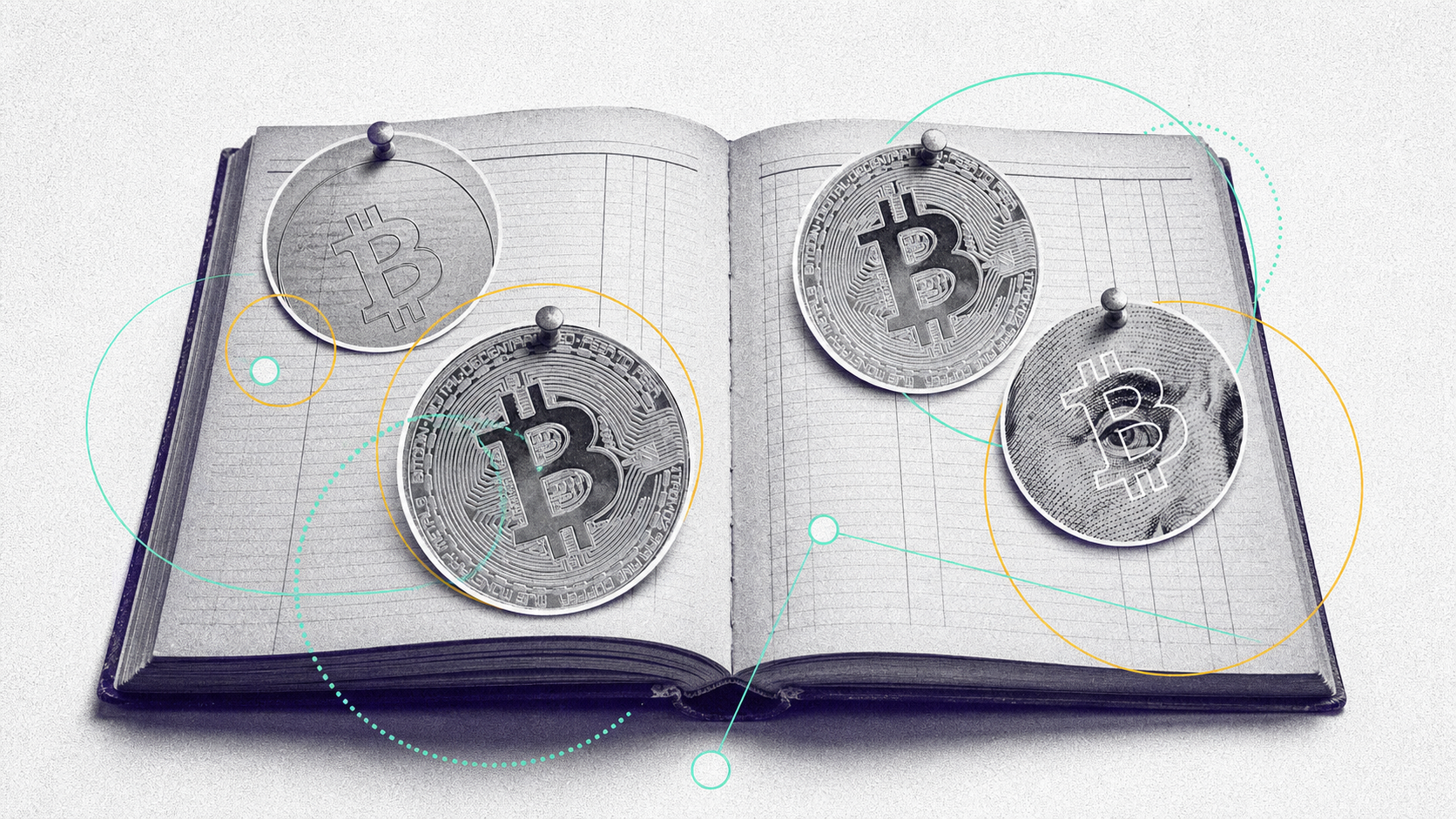
A centralized crypto exchange is a marketplace for matching buyers and sellers directly.
People place orders to buy or sell crypto, and the exchange brings those orders together. If a buyer and seller agree on a price, the exchange can match their orders and complete the trade.
Think of it as a marketplace with a constantly changing list of current offers to buy or sell that is maintained and continuously updated by the marketplace. That list is called an order book.
For example, someone might offer to sell Bitcoin at one price while someone else is willing to buy at that same price. The system matches the two closest prices (i.e., the "bid" and the "ask") to complete a transaction.
Crypto exchanges can also offer accounts, CAD funding, crypto custody, trading tools and customer support. But the exchange itself is the marketplace where orders meet.
In regulatory terms, Canadian authorities categorize this as a 'marketplace' platform, where client orders are matched and interact directly. By contrast, on a crypto trading platform, client orders do not interact directly with each other and are facilitated through the platform itself.
All three can give you access to crypto, but they do it differently.
The names overlap in everyday conversation, which is part of the confusion. In Canada, regulators use Crypto Asset Trading Platform, or CTP, as a broader term that includes different business models.
So when you see a company described as a "crypto exchange," it is worth looking one step deeper and asking how the service actually handles trades.
A crypto trading platform gives customers a way to buy and sell crypto, but it does not necessarily run its own marketplace.
A dealer-based platform works differently from an exchange. Instead of putting your order into a marketplace to be matched with another customer, the platform checks prices from outside institutional trading firms to provide a price that is used to trade an underlying asset with you. These outside firms are often called liquidity providers. Their role is to provide pricing and access to crypto that the CTP can use to complete trades.
This is the model Newton uses.

When you place a trade on Newton, your order is not matched with another Newton customer.
Newton checks live prices from its network of liquidity providers and selects the best available price from that network. If you accept, you trade directly with Newton, which then settles the underlying trade with that liquidity provider.
This process is called a request-for-quote, or RFQ, model.
Newton's trading fees range from 0.05% to 1.6% per trade.
The simple difference is this:
An exchange brings buyers and sellers together and matches their trades directly. Newton does not. Newton sources pricing from liquidity providers and trades directly with its customers.
A decentralized exchange, or DEX, works without a company sitting in the middle of each trade.
Instead, DEXs use smart contracts on a blockchain to let people trade crypto from compatible self-custody wallets. You keep control of the wallet and approve the transaction yourself.
Many DEXs use liquidity pools. These are pools of crypto that other users have supplied so trades can take place. Other DEXs use onchain order books or systems that search across several sources for a trade.
A typical DEX trade looks like this:
That gives the user more direct responsibility. You need to manage your own wallet, choose the right blockchain network, check token addresses and have enough crypto to cover network fees.
For someone starting with Canadian dollars, there is another practical difference. A DEX generally is not your first stop for turning CAD into crypto. You normally need crypto in your wallet before you can make an onchain swap.
You do not need to care about industry labels for their own sake.
The useful part is knowing what those labels tell you about the service you are using.
Two apps might both have a Buy Bitcoin button. Behind that button, the trade could be handled in completely different ways.
Here are the questions that matter more than whether the word "exchange" appears in the name.
Start here.
Does the service match your order with another buyer or seller? Does it give you a price and trade directly with you? Or does the trade happen through a blockchain protocol?
Knowing that tells you much more about how the platform works than the label alone.
Look at the full cost, not just one advertised number.
Depending on the service, trading costs can include fees, spreads and blockchain network costs. Funding and withdrawals can have their own costs too.
On Newton, trading fees range from 0.05% to 1.6% per trade.
The goal is to understand what you are paying when you complete the transaction.
If you are starting with CAD, funding matters.
Check whether you can use the methods you already rely on, such as Interac e-Transfer or wire transfer, and how you can move money back to your bank when you need it.
Newton supports CAD funding through Interac e-Transfer and wire transfer.
Buying crypto and being able to move it are two different things.
Check whether the service supports crypto deposits and withdrawals, which networks are available, and whether you can send supported assets to an external wallet.
Newton supports crypto deposits and withdrawals for supported assets and networks.

On a centralized exchange or dealer platform, the company commonly holds crypto for customers.
Newton holds crypto on behalf of its clients through its approved custodians, so clients don't hold their own private keys on Newton.
On a DEX, you generally trade directly from a self-custody wallet.
That changes who is responsible for things like private keys, wallet security and approving transactions.
Support matters most when something does not go as planned.
Look at how you can contact the company, when support is available and whether there is a clear place to go if you have a problem with your account.
Newton's support desk is available seven days a week from 8 a.m. to midnight ET through its support channels.
If a company offers crypto trading services to Canadians, check its current regulatory status rather than relying on words like "Canadian exchange" or "regulated platform."
Newton is a dealer member of the Canadian Investment Regulatory Organization (CIRO) and the Canadian Investor Protection Fund (CIPF). Newton is an investment dealer registered in each province and territory of Canada, providing order-execution only trading of crypto assets (crypto) and related services to self-service investors.
That is useful information when comparing platforms, but it does not remove the risks of investing in crypto. Crypto assets are not protected by the Canadian Investor Protection Fund (CIPF), the Canada Deposit Insurance Corporation (CDIC), or any other investor protection insurance scheme.
No. Newton is a Canadian crypto trading platform, not a crypto exchange.
Newton does not run a marketplace where Newton customers' buy and sell orders are matched with one another. Instead, Newton gets live prices from its liquidity providers and trades directly with its customers.
For the person making the trade, the process is straightforward.
Newton supports Interac e-Transfer, wire transfers and crypto deposits for funding, along with more than 50 cryptocurrencies. Market orders, limit orders and recurring buys are also available.
🔗 Funding & Withdrawals on Newton
There is no need to start with "Which crypto exchange is best?"
A better starting point is figuring out what you actually need.
Ask:
Once you know the answers, the difference between an exchange, a dealer-based platform and a DEX becomes much easier to understand.
And you can choose based on how the service actually works, not just what people call it.


.png)
.png)