
☕️ Read in 4 minutes — August 2026
August delivered a more complicated economic picture than July.
Canadian inflation held steady at 3.0% in August, while grocery price growth eased further. Newly released GDP data also showed the economy grew more strongly in the second quarter. Trade tensions with the U.S. escalated sharply late in the month, while crypto markets staged a strong rebound, led by Bitcoin.
The result was a month in which economic resilience and renewed market momentum sat alongside some significant new risks.
Today’s BYTE: steady inflation, stronger Q2 growth, escalating Canada-U.S. trade tensions, and a late-month crypto rally.
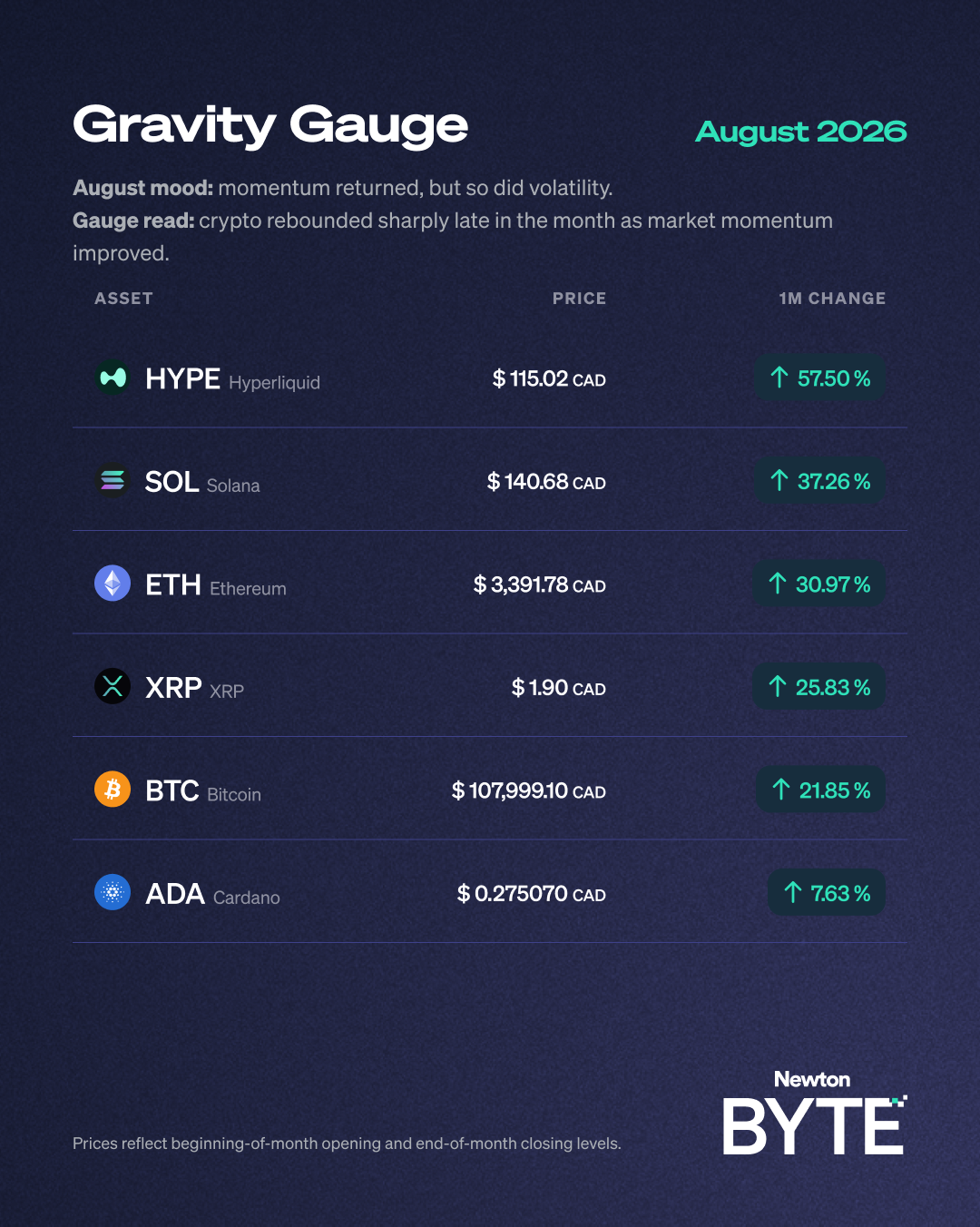
Bitcoin started August near CAD$88,000 and ended the month around CAD$107,000, gaining roughly 22% and briefly climbing above CAD$110,000. Even after August’s gain, Bitcoin remains down for 2026 and well below its October 2025 record high.
The rally was broad rather than isolated to Bitcoin, with Ether and several other major crypto assets also gaining ground during the second half of the month.

The broader economy strengthened in the second quarter. Real GDP grew 0.8% in the second quarter (or 3.3% annualized), led by higher exports, household spending and business investment, after growth of just 0.1% in the first quarter.
The labour market softened in August. Employment fell by 42,000, but the unemployment rate held at 6.4% because the labour force contracted alongside it.
Inflation held at [3.0% year over year in August](https://vancouver.citynews.ca/2026/09/14/statistics-canada-to-report-inflation-figures-for-august-this-morning/?). There was also some relief at the grocery store, where food prices rose 2.8% year over year—slower than headline inflation for the first time since July 2024.
Trade moved back to the centre of Canada’s economic outlook late in August.
The U.S. imposed tariffs of up to 50% on CAD$27.6 billion of Canadian goods, effective August 22. Canada subsequently suspended trade negotiations and announced matching counter-tariffs on CAD$27.6 billion of U.S. imports.
Those counter-tariffs took effect September 8, with rates of 15%, 25% and 50% depending on the product.
Ottawa also announced CAD$7.5 billion in new and expanded support for affected businesses and workers, on top of roughly CAD$25 billion announced earlier. The bigger question is what prolonged trade friction could mean for Canadian growth, business investment and inflation in the months ahead.

Why it matters: the SEC is moving toward a more tailored regulatory framework for certain crypto-related offerings. The proposal is not final, but it could materially change how some crypto projects raise capital in the U.S.
Why it matters: stablecoin legislation is moving from broad statutory rules into the details of how the market will actually operate. Those definitions could influence which issuers can access U.S. users and how international stablecoin markets interact with the U.S. regulatory system.
Why it matters: as crypto trading platforms become more fully integrated into Canada’s regulated investment-dealer framework, the infrastructure around supervision, including how that supervision is funded, is becoming more formalized. Newton is a CIRO dealer member and would be subject to this model.
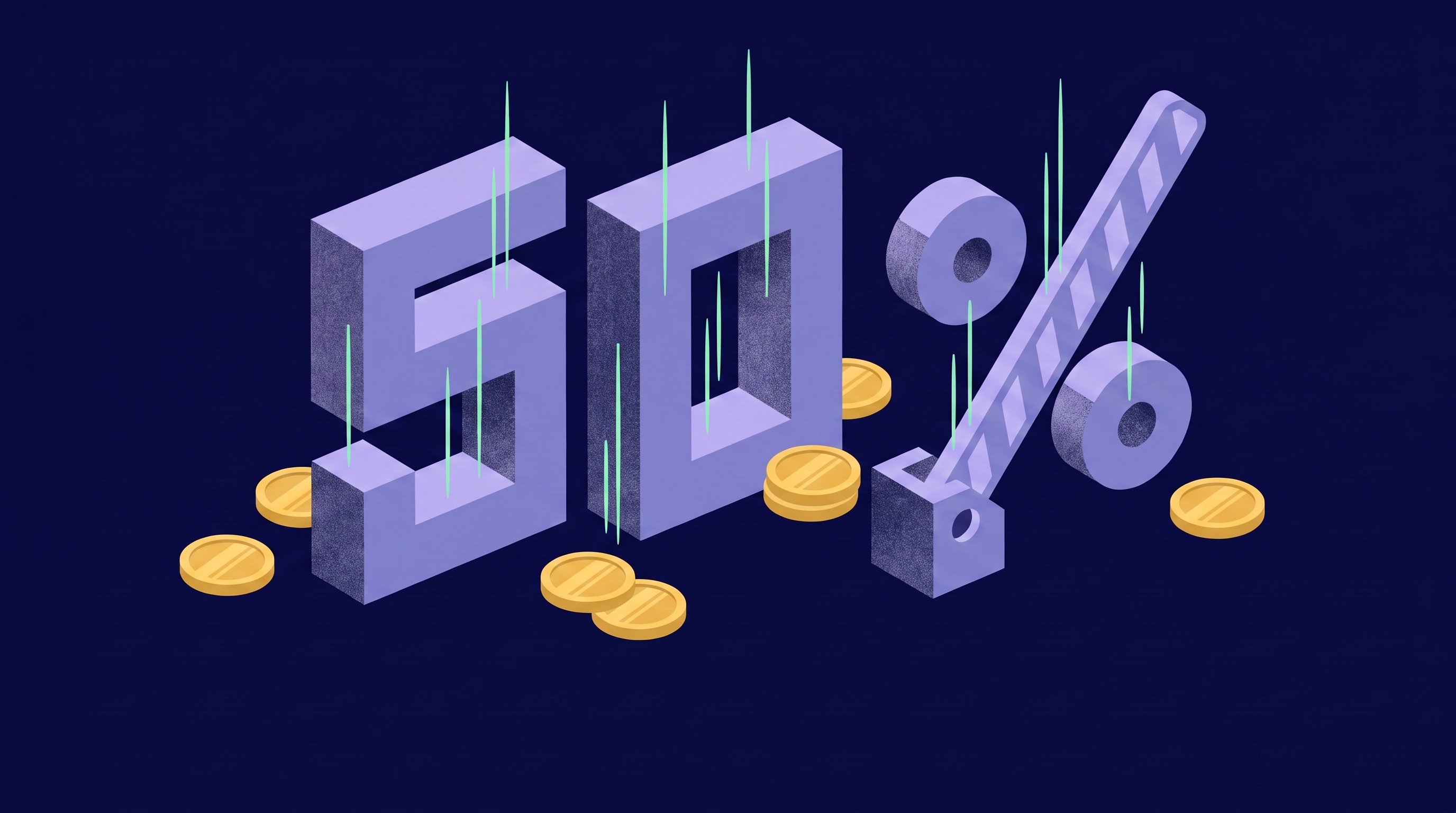
That’s the highest tariff rate the U.S. imposed on CAD$27.6 billion in Canadian goods in August.
The figure captures one of August’s biggest shifts. Canada’s economic data had been steadier than expected, but renewed trade tensions introduced another source of uncertainty for businesses, consumers and policymakers.
August produced stronger signals from both Canada’s economy and crypto markets, but neither is unambiguous.
Inflation accelerated, trade risks increased, and more recent labour-market data showed some renewed softness. At the same time, Bitcoin’s late-month rally showed how quickly market sentiment can change when macro conditions shift.
September is already testing both. Crypto has held onto much of its August rebound, but volatility has returned, while softer employment data and renewed trade pressure are adding uncertainty to Canada’s economic outlook.



.png)
.png)